August 5, 2026
Wilcox Family Insurance Company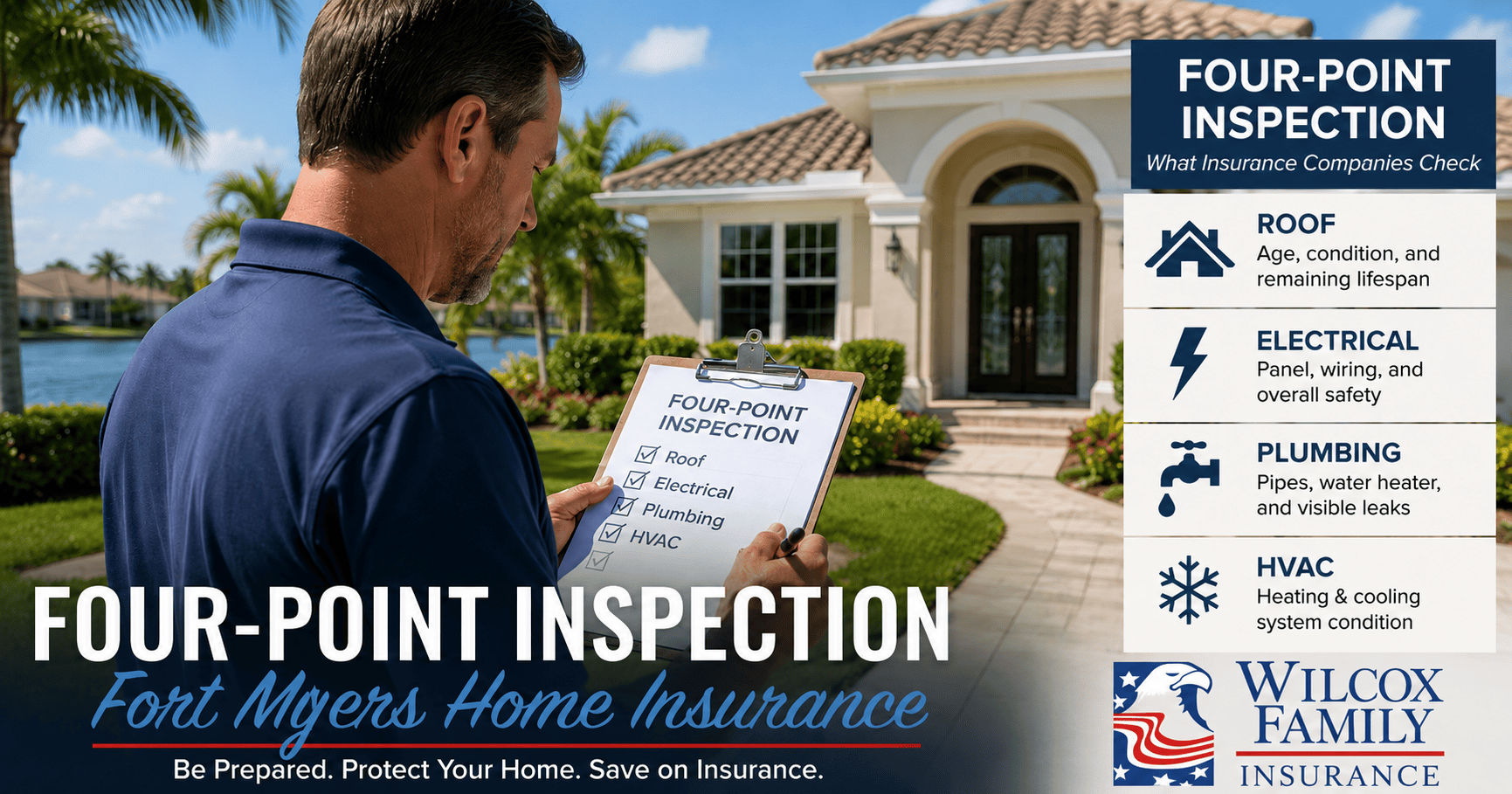
Four-Point Inspections for Fort Myers Homeowners
What to Know Before Shopping for Home Insurance
Buying or insuring an older home in Fort Myers can involve a few additional steps that do not always apply to newer properties. One of the most common is a four-point inspection.
A four-point inspection gives an insurance company information about four major systems within the home:
- Roof
- Electrical
- Plumbing
- Heating and air conditioning
The condition and age of these systems may affect whether an insurance company is willing to insure the property, whether repairs are required and which policy options may be available.
Wilcox Family Insurance helps local property owners compare Fort Myers homeowners insurance options and understand the inspections and documents that different insurance companies may request.
This guide explains what a four-point inspection is, how it differs from other inspections and what Fort Myers homeowners should know before ordering one.
What Is a Four-Point Inspection?
A four-point inspection is a limited evaluation of four major home systems that insurance companies commonly review when underwriting an older property.
It generally focuses on:
- The roof
- The electrical system
- The plumbing system
- The heating, ventilation and air-conditioning system
The Florida Department of Financial Services explains that insurance companies may request four-point inspections for older homes. If a requested inspection is not provided, an insurer may decline to offer certain coverage or decline to insure the property. Requirements can differ among insurance companies.
A four-point inspection does not automatically determine whether a home is insurable. The report gives the insurance company information, and the company’s underwriting department makes the eligibility decision.
Why Insurance Companies Request Four-Point Inspections
Insurance companies use inspections to better understand the condition of a property before agreeing to cover it.
Older homes may contain systems that have been repaired, replaced or modified at different times. Public property records may show the original year of construction but not clearly document later updates.
A four-point inspection can help an insurance company confirm:
- Approximate system ages
- Visible condition
- Types of materials
- Evidence of current problems
- Whether updates appear to have been completed
- Whether additional documentation or repairs may be needed
The exact age at which an insurance company requests an inspection varies. Homeowners should not assume that every carrier follows the same rule.
Citizens, for example, currently requires a four-point inspection for certain new applications involving properties more than 20 years old. That is a Citizens requirement—not a universal rule for every Florida insurer.
A Four-Point Inspection Is Not a Full Home Inspection
A four-point inspection should not be confused with the comprehensive home inspection commonly ordered during a real-estate purchase.
A full home inspection may examine a much broader range of items, including:
- Structure
- Foundation
- Exterior
- Interior
- Windows and doors
- Appliances
- Attic
- Insulation
- Drainage
- Safety concerns
- Additional property components
A four-point inspection has a narrower insurance-related purpose. It gives the insurer information about the roof, electrical, plumbing and HVAC systems.
Passing a full home inspection does not necessarily eliminate the need for a four-point report. Likewise, a four-point inspection is not a substitute for a full inspection when buying a home.
A Four-Point Inspection Is Also Different From Wind Mitigation
Fort Myers homeowners frequently hear the terms “four-point inspection” and “wind mitigation inspection” during the same insurance conversation, but they serve different purposes.
A four-point inspection evaluates the condition and characteristics of four major systems.
A wind mitigation inspection documents features that may help the home withstand wind damage, such as:
- Roof shape
- Roof-deck attachment
- Roof-to-wall connections
- Secondary water resistance
- Impact-rated windows
- Hurricane shutters
- Protected exterior openings
A four-point report primarily supports underwriting and eligibility. A wind mitigation report may help determine whether the home qualifies for wind-related insurance credits.
Some homeowners need both reports.
When comparing homeowners insurance coverage, ask the agent which inspections are required, how current each report must be and whether the insurance company has a preferred form.
What Does the Roof Section Review?
The roof portion of a four-point inspection may include information about:
- Roof material
- Approximate age
- General condition
- Visible damage
- Evidence of leaks
- Remaining useful life
- Prior repairs
- Roof shape or configuration
- Permit or replacement information
Roof condition is an important underwriting concern in Florida because the roof helps protect the home from wind and water intrusion.
An older roof does not automatically make a home uninsurable. However, the roof’s age, condition, materials and documentation may affect which companies will consider the property.
Before ordering an inspection, locate any available:
- Roof permits
- Paid invoices
- Contractor documentation
- Final inspection records
- Product warranties
- Photographs of completed work
If a roof was recently replaced but public records have not been updated, providing the documentation may help prevent the home from being evaluated using outdated information.
What Does the Electrical Section Review?
The electrical portion may document:
- Approximate system age
- Main panel information
- Wiring type
- Amperage
- Visible condition
- Evidence of unsafe or exposed wiring
- Observed deficiencies
- Whether updates appear to have been made
Insurance companies evaluate electrical systems because outdated, damaged or improperly modified components may increase the risk of fire or other property damage.
The inspector is not the insurance underwriter, and the report itself does not guarantee approval or denial. Different companies may view the same electrical system differently.
Before the inspection:
- Make sure the electrical panel is accessible.
- Do not block the panel with furniture or stored belongings.
- Locate invoices or permits for prior electrical work.
- Correct known exposed or damaged wiring through a qualified professional.
- Do not attempt unsafe electrical repairs yourself.
If the report identifies a concern, ask your insurance agent whether the company requires a repair, additional documentation or an evaluation by a licensed electrician.
What Does the Plumbing Section Review?
The plumbing portion may document:
- Supply-line materials
- Drain-line materials
- Water-heater information
- Visible leaks
- Evidence of prior leakage
- Corrosion
- Shutoff valves
- Under-sink plumbing
- General system condition
Active leaks or evidence of unresolved water problems can affect underwriting.
Before the inspection, check accessible areas such as:
- Beneath sinks
- Around toilets
- Near the water heater
- Around washing-machine connections
- Near exposed plumbing
- Around visible supply valves
A four-point inspection is not a concealed-pipe inspection and does not guarantee that every plumbing problem will be discovered. Its role is to document visible information requested by the insurance company.
It is also important to understand that plumbing-related water damage is different from flooding. Standard homeowners policies generally do not cover rising water or storm surge, which is why Fort Myers homeowners should separately review their flood insurance options.
What Does the HVAC Section Review?
The HVAC portion may include information about:
- System type
- Approximate age
- General operating condition
- Heating method
- Visible damage
- Evidence of leakage or deterioration
- Manufacturer information
The inspector may photograph the equipment and manufacturer label when accessible.
Before the inspection:
- Make sure the indoor and outdoor equipment can be reached.
- Replace severely clogged filters.
- Remove stored items blocking the equipment.
- Locate receipts or documentation for replacement systems.
- Address known drainage or operational issues.
An older HVAC system does not necessarily prevent a home from qualifying for insurance, but the company may consider its condition along with the other systems.
Common Issues That Can Delay an Insurance Quote
A four-point report may slow down underwriting when it contains missing information, unclear photographs or unresolved concerns.
Potential problems include:
- Active roof or plumbing leaks
- Incomplete system information
- Missing required photographs
- Unverifiable inspector credentials
- Electrical hazards
- Significant roof deterioration
- Water damage that has not been repaired
- HVAC equipment that is not operating
- Reports completed on an outdated or unacceptable form
- Conflicting information between the inspection and application
Citizens currently requires reports to contain specified system information, professional credentials and supporting photographs. Private insurers may use different forms or standards, which is why homeowners should confirm requirements before paying for an inspection.
Ask Your Insurance Agent Before Ordering the Inspection
One of the easiest mistakes is paying for an inspection before confirming exactly what the insurance company needs.
Before scheduling a four-point inspection, ask:
- Is a four-point inspection required for this home?
- How recent must the report be?
- Is there a preferred form?
- Who is permitted to complete it?
- Are specific photographs required?
- Is a separate roof inspection needed?
- Is a wind mitigation inspection also recommended?
- Can the same inspector complete both reports?
- Should known repairs be completed first?
Our guide to questions you should ask when reviewing a home insurance quote provides additional points to discuss before selecting a policy.
Confirming the requirements first may prevent paying for a report that is outdated, incomplete or unacceptable to the company being considered.
How Fort Myers Homeowners Can Prepare
A homeowner does not need to remodel the entire property before an inspection. However, addressing known maintenance problems and gathering documentation can make the process more efficient.
Before the inspector arrives:
Gather documents
Locate permits, invoices and records for updates to:
- Roof
- Electrical system
- Plumbing
- HVAC system
- Water heater
Provide clear access
Make sure the inspector can reach:
- Electrical panel
- Water heater
- HVAC equipment
- Under-sink plumbing
- Attic access, when needed
- Exterior roof areas
Address active problems
Have qualified professionals evaluate known concerns such as:
- Active leaks
- Exposed wiring
- Inoperable HVAC equipment
- Damaged plumbing
- Visible roof openings
- Unrepaired water damage
Do not conceal defects
Attempting to hide a problem may lead to more serious insurance or safety concerns later. Accurate information gives your agent the best opportunity to identify appropriate carrier options.
What Happens After the Inspection?
Once the report is completed, provide it to your insurance agent promptly.
The agent may:
- Submit it with the application
- Request missing photographs
- Ask the inspector to clarify an answer
- Obtain quotes from eligible companies
- Discuss repairs requested by underwriting
- Compare alternative carriers
- Recommend a separate roof or wind mitigation inspection
A report showing a concern does not necessarily mean there are no insurance options. One company may request a repair while another may evaluate the property differently.
This is where working with an independent agency can be particularly helpful. Wilcox Family Insurance can review available options from multiple companies rather than relying on the guidelines of only one insurer.
You can learn more about our local team by visiting Meet the Wilcox Family Insurance staff or reading reviews from our customers.
Can Repairs Improve Home Insurance Eligibility?
Completing repairs may improve the number of insurance options available, but it does not guarantee approval or a lower rate.
The effect depends on:
- What was repaired
- Quality of the work
- Supporting documentation
- Current carrier requirements
- Condition of the other systems
- Age and characteristics of the home
- Claims history
- Coverage requested
Keep all permits, invoices and photographs after completing work.
Ask your agent whether underwriting needs:
- A revised four-point inspection
- Repair receipts
- Contractor invoices
- Photographs
- Permit records
- A licensed professional’s letter
- A separate system inspection
If an insurer has declined or nonrenewed the property, our article about Florida homeowners insurance nonrenewals explains additional steps homeowners can consider.
Does a Four-Point Inspection Address Hurricane Coverage?
A four-point inspection may provide information about the roof, but it does not fully explain how a homeowners policy will respond to a hurricane.
Homeowners should separately review:
- Hurricane deductible
- Wind coverage
- Roof-loss settlement
- Screened-enclosure coverage
- Additional living expenses
- Water-damage provisions
- Flood exclusions
- Policy endorsements
Learn more about Florida hurricane insurance and storm coverage before hurricane season or before selecting a new policy.
Remember that wind damage and flood damage can be treated differently. A policy may cover certain wind-related damage while excluding rising water and storm surge.
Four-Point Inspections for Home Purchases
Homebuyers should begin the insurance process early, particularly when purchasing an older home.
Do not wait until the final days before closing to discover that the insurance company needs:
- A four-point inspection
- Wind mitigation report
- Roof documentation
- Proof of repairs
- A different policy form
- Additional photographs
Obtaining insurance information early can provide time to address questions before they interfere with the closing timeline.
Send your agent:
- Property address
- Expected closing date
- Listing information
- Current inspection reports
- Roof permit information
- Seller-provided repair records
- Current insurance details, when available
The agent can then explain which additional documents may be needed.
Why Use a Local Independent Agency?
Fort Myers homes are not all evaluated the same way.
One insurance company may be a good fit for a newer property, while another may be more competitive for an older home with documented updates. Some companies may accept a system that another insurer will not.
A local independent agency can help compare:
- Carrier eligibility
- Inspection requirements
- Roof provisions
- Water-damage limitations
- Hurricane deductibles
- Wind mitigation credits
- Flood insurance options
- Coverage limits
- Pricing
Our goal is not simply to produce the lowest preliminary number. It is to help homeowners understand what documentation is required and what meaningful differences exist between available policies.
Get Help With Fort Myers Home Insurance
A four-point inspection can feel intimidating, but it is usually easier to manage when you understand what the insurance company is requesting.
The best first step is speaking with an agent before ordering the report.
Wilcox Family Insurance can help you:
- Determine whether an inspection may be needed
- Review an existing report
- Identify missing information
- Compare available insurance companies
- Explain coverage differences
- Review hurricane and flood concerns
- Prepare for a home purchase or renewal
Explore your Fort Myers home insurance options, request an insurance quote or contact Wilcox Family Insurance to speak with a local agent.
Frequently Asked Questions
What does a four-point inspection check?
A four-point inspection reviews the roof, electrical system, plumbing system, and heating and air-conditioning system.
Does every Fort Myers home need a four-point inspection?
No. Requirements depend on the home and insurance company. Insurers commonly request the report for older properties, but the applicable age and documentation rules vary.
Is a four-point inspection the same as a wind mitigation inspection?
No. A four-point inspection focuses on the condition of four major systems. A wind mitigation inspection documents features that may qualify the home for wind-related insurance credits.
Can a home fail a four-point inspection?
The inspector documents the home’s visible systems and condition. The insurance company then decides whether the property meets its underwriting requirements, needs repairs or requires additional information.
How long is a four-point inspection valid?
The acceptable age varies by insurance company. Citizens currently requires certain reports to have been completed within the preceding 12 months for applicable new-business submissions, but private companies may follow different standards.
Who can perform a four-point inspection?
The insurance company determines which professionals and forms it will accept. Homeowners should verify those requirements before scheduling the inspection.
Will a four-point inspection lower my homeowners insurance premium?
A four-point inspection is generally used for underwriting and eligibility rather than discounts. A separate wind mitigation inspection is more directly associated with qualifying wind mitigation credits.
Should I repair problems before the inspection?
Known safety hazards, active leaks and unrepaired damage should be evaluated by qualified professionals. Ask your agent whether the insurer needs repairs completed before application submission.
Can Wilcox Family Insurance review my inspection?
Yes. Our team can review the report, identify information the insurance company may request and compare available coverage options.